Your route mattered more than the eight hours
You flew Etihad on a trip that started in the US and sat through an eight-hour delay. Afterward you got a meal voucher, a small Etihad Money credit, or a handful of bonus miles. A wait that long feels like it should have earned more. Under the rules that govern your ticket, though, the length of the delay mattered less than the airport your flight left from.
Etihad is the national carrier of the United Arab Emirates, and it holds no EU or UK air operator certificate. That one fact settles most of the question. Europe's EU261 regulation and its British counterpart, UK261, cover non-European airlines only on flights that depart an EU or UK airport. On those flights, a delay of three hours or more at your final destination can pay compensation. On a route longer than about 2,175 miles the maximum is €600 under EU261 or £520 under UK261, and the amount can be cut when the delay is under four hours.
So two people on the same airline, delayed by the same eight hours, can end up with very different results:
– London Heathrow to Abu Dhabi, arriving eight hours late: covered by UK261. The flight qualifies for up to £520 unless Etihad shows the delay came from extraordinary circumstances.
– New York JFK to Abu Dhabi, arriving eight hours late: not covered.
– The return trip through Abu Dhabi back to the US: also not covered, because a non-European airline is flying it from outside Europe.
An itinerary that ends in Europe doesn't change this. If you start in the US and connect in Abu Dhabi to Paris or Frankfurt, the trip still falls outside EU261. The EU Court of Justice has kept journeys like these, which begin outside the EU on a non-EU carrier, outside the regulation, including in its ruling in case C-451/20.
If you expected $400 to $800 in cash for an eight-hour wait, that figure comes from the European system. A US-origin Etihad itinerary sits completely outside it.
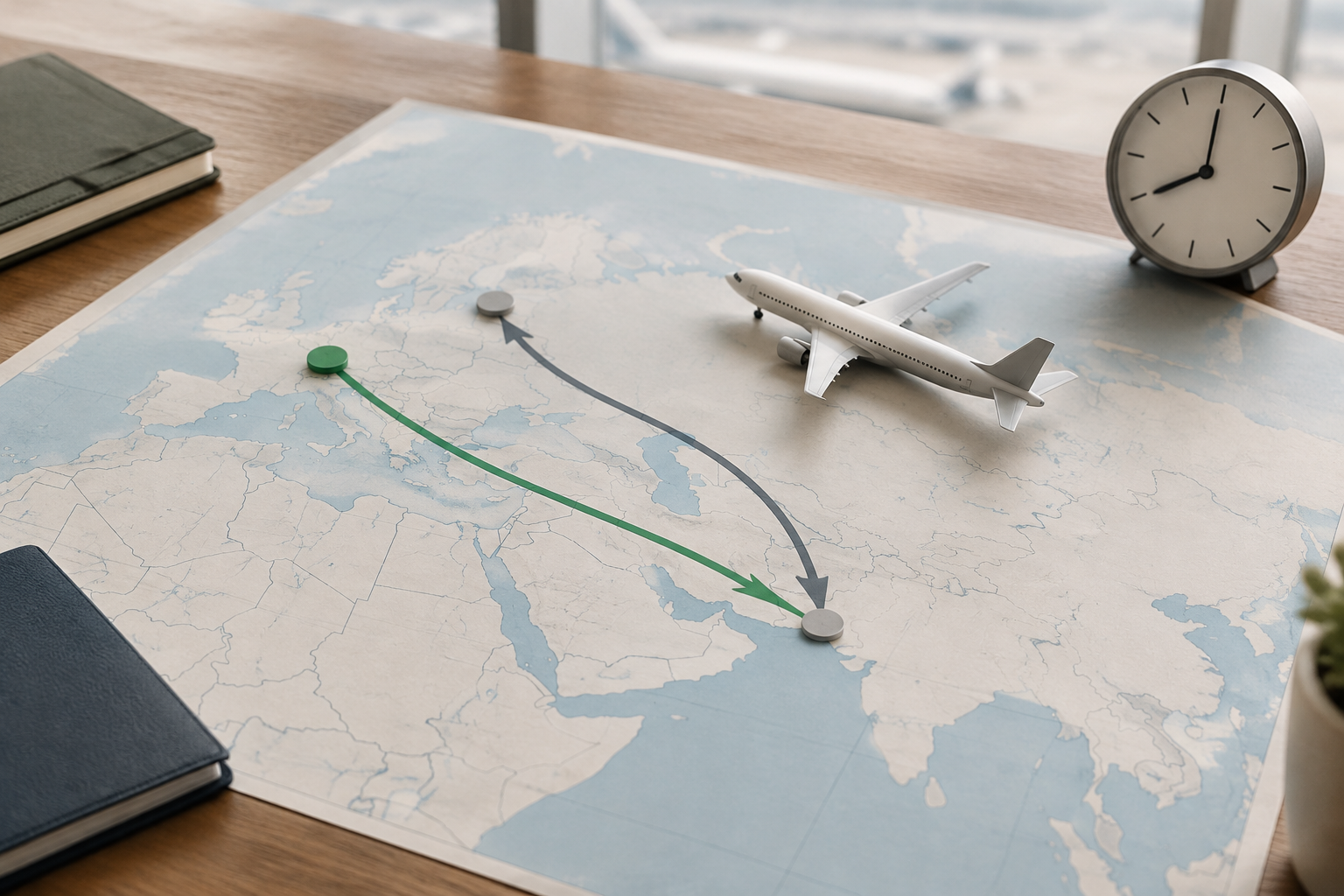
No US law pays you for waiting
Federal rules don't require airlines to pay cash for a delay of any length. US law mandates cash compensation in one situation only: involuntary denied boarding, when you're bumped from an oversold flight.
The US Department of Transportation does require refunds in specific cases. Under the rule it finalized in 2024, a delay of six hours or more on an international flight counts as a significant change. If that happens and you decide not to travel, or you turn down the alternative the airline offers, you're owed a full cash refund for the ticket.
That refund pays you for walking away. If you board the delayed flight and finish the trip, the rule owes you nothing more.
You may have seen DOT's dashboard, which lists meal and hotel commitments for controllable delays. Those commitments are voluntary pledges from US airlines. Foreign carriers that serve the US, Etihad among them, file customer service plans instead.
What Etihad is actually required to give you
Etihad's minimum obligations come from the UAE General Civil Aviation Authority. Its Passenger Welfare Program, CAR-PWP Issue 02, took effect January 1, 2025, and sets care standards for UAE airlines and airports. For a delay of 2 to 3 hours, the airline owes you flight information and reasonable refreshments or meals. Once a delay passes roughly 6 to 8 hours, or runs overnight, it owes you a hotel, ground transportation, meals, and access to communications such as Wi-Fi or a phone.
The program contains no cash penalty. Unlike EU261, or Saudi Arabia's aviation rules, the UAE framework doesn't set fixed compensation for delays. An airline complies with UAE law by providing care.
Etihad's conditions of carriage say the same thing in contract language. The airline commits only to reasonable efforts to keep to its schedule and disclaims anything beyond that. For long controllable delays, its policy provides meal vouchers, plus a hotel when the wait runs past 6 to 8 hours or overnight, subject to local availability.
An eight-hour wait sits right at the edge of that 6-to-8-hour band. Meals are the floor, but a delay that long gives you a real basis to ask for a hotel room, transport to it, and Wi-Fi or a phone, even if the disruption never runs overnight. If it does run overnight, the hotel and transport are clearly owed.
If you complained afterward and Guest Relations sent you Etihad Money or some bonus miles, that is a standard response on non-EU routes. Etihad offers it as an ex-gratia gesture, meaning goodwill and not a legal settlement.
Is the voucher the end of it?
Not necessarily, although the remaining legal option is narrower than most people hope. The Montreal Convention governs most international flights. Its Article 19 makes airlines liable for damage caused by delay, up to 6,303 Special Drawing Rights, or about $8,300.
The cap looks generous until you see what counts as damage. The convention reimburses proven out-of-pocket losses: a prepaid, non-refundable hotel night you couldn't use, taxi fares, or a separately ticketed onward flight you missed because of the delay. It doesn't pay for fatigue, a lost vacation day, or the general misery of eight hours in a terminal. If the delay cost you nothing beyond the meals and hotel Etihad already covered, the airline's liability under Article 19 is effectively zero. UAE law takes the same approach. Under Federal Decree-Law No. 50 of 2022, the commercial transactions law, you can recover delay damages only by proving a quantifiable financial loss.
Accepting a gate meal voucher doesn't waive these rights. You can take the sandwich and still claim your receipted costs later.
So skip the long email about how exhausted you were or the first day of vacation you lost, and put the effort into receipts. If you have them, ask Etihad to reimburse those costs in cash instead of accepting another round of Etihad Money. A credit is only useful if you fly Etihad again, while a reimbursed hotel bill is money back in your account.
The documentation that carries weight is specific. Keep itemized receipts showing the vendor, date, and amount, and the booking confirmation proving a hotel or onward ticket was prepaid and non-refundable. Add your boarding pass or delay notice to tie those costs to the disrupted flight.
Where the real money usually is
I'd start with the credit card you used to buy the ticket, not with Etihad. Many premium travel cards include a trip-delay benefit that reimburses meals and lodging once a delay passes a set number of hours. For a US-origin trip, that benefit is usually the largest payout you can realistically get, and it doesn't depend on Etihad agreeing to anything. Delay thresholds and coverage limits differ from card to card.
Then send Etihad a reimbursement claim for out-of-pocket costs, with every receipt attached.
If the disrupted flight departed an EU or UK airport, Etihad may blame air traffic control. That isn't necessarily the final answer: you can escalate to the UK Civil Aviation Authority's PACT service or to the national enforcement body in the EU country you departed from, which can overturn the explanation when the real cause was a knock-on delay from an earlier flight.